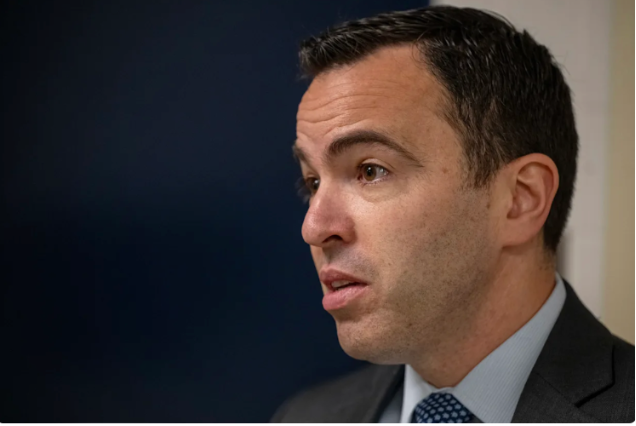
“We fucking hang the spooks up here.” Recordings of police chief and mayor about a black puppet found hanging in a high school.
Clark Township, New Jersey is back in the spotlight for what the state is calling a years-long pattern of racially targeted traffic enforcement, with the New Jersey Attorney General and the Division on Civil Rights filing a civil lawsuit that names the town, the police department, the former mayor, and senior police leadership.
This is not a one-off scandal. It is the latest chapter in a saga that has been unfolding publicly since 2020, when a whistleblower surfaced recordings that captured racist language by people at the top of Clark government and Clark police leadership. Recorded conversation linked here.
The core allegation in the new lawsuit is blunt. The state says Clark officials pushed officers to treat Black and other non-white drivers as unwanted in town, and then built day to-day-policing patterns around that goal.
Setting and stakes
Clark Township is a small Union County suburb with a population around 15,000, overwhelmingly white by residential makeup. The US Census Bureau QuickFacts table lists Clark as 85.7 percent White alone, 2.2 percent Black alone, and 9.4 percent Hispanic or Latino, with a median household income of $122,610 in 2023.
That local context matters because the lawsuit is not describing a town reacting to a surge in local crime. It is describing a town where leadership allegedly treated the people driving in from nearby, more diverse municipalities as a problem to be managed out of sight.
This is exactly where the sundown town dynamic shows up in modern form. Not a city limit sign. Not a curfew bell. Traffic stops. Patrol saturation. Pretextual searches. The quiet message is that non-white people are tolerated only if they pass through fast and invisible.
The state’s headline allegations
The lawsuit was announced by New Jersey Attorney General Matt Platkin and the Division on Civil Rights. ABC7 describes it as a case alleging “systematic racism” and “years” of discriminatory harassment of Black and other non-white drivers, tied to decisions “led and encouraged” by then mayor Salvatore Bonaccorso and Police Chief Pedro Matos.
The defendants named in reporting include Clark Township, the Clark Police Department, former Mayor Salvatore Bonaccorso, former Police Chief Pedro Matos, and police director Patrick Grady.
What the state says about the policing strategy
Multiple outlets converge on the same operational picture.
- The complaint alleges enforcement was steered toward the roads people use to enter Clark from nearby municipalities with larger Black and Latino populations, and from major routes connected to the Garden State Parkway.
- The complaint alleges officers were pushed toward stops that are easy to justify on paper but highly discretionary in practice, including minor equipment issues and paperwork type violations, and then searches justified by subjective claims such as “marijuana odor.”
- The state says the impact was not subtle. One summary of the state’s statistics says that from 2015 to 2020, Black residents were about 1.5 percent of Clark’s population while Black drivers were more than 22 percent of the drivers stopped by Clark police in that period.
Another summary, also drawn from the complaint, says more than 37 percent of recorded stops between 2015 and 2020 involved Black or Hispanic drivers even though Black and Hispanic residents together were less than 11 percent of Clark’s population. It also describes higher search rates for Black drivers and Hispanic drivers relative to white drivers, and notes that more than half of stops made outside Clark’s municipal boundaries involved Black or Hispanic motorists and that mayor Bonaccorso instructed officers to “keep Black people out of Clark.”
Those are the kinds of stop patterns that make the state’s underlying claim legible. This was not random. This was not an “implicit bias training” issue. The state is describing intent.
The alleged instruction from the top
Reporting describes the central character moment like this. The state says then including by focusing more patrols and traffic stops on roads coming from neighboring towns with higher minority populations.
Bloomberg Law also describes a 2019 conversation in which Bonaccorso used a racial slur and told a police lieutenant to keep chasing Black people out of town.
The collection of evidence changes the story from disparate impact to purposeful targeting. The state is not only saying the numbers are ugly. The state is saying the ugliness was the whole point.
Where the Attorney General and the Division on Civil Rights say this goes next
The reporting that is publicly accessible lays out the broad remedies the state is seeking.
ABC7 says the state is seeking to stop harassment, impose continued monitoring of township leadership and the police department, and obtain damages for people who were victimized.
Another report describes the same general goals as court ordered reforms, continued monitoring by the Division on Civil Rights, and financial compensation for those harmed.
In plain terms, the state is trying to get a judge to force structural change, not just punish individuals. That matters because Clark’s scandal has already spent years stuck in the slow motion world of internal discipline fights and paid suspensions. The civil rights lawsuit is an attempt to move the center of gravity away from “will anyone ever be fired” and toward “how do we stop this from happening again and compensate the people it already happened to.”
Who is still in place and what has not been resolved
The “suspended with pay reality”
The reporting is unusually explicit that key people remained on paid suspension years after the scandal initially broke.
ABC7 states that the officers involved including Chief Matos are still suspended with pay.
Patch puts numbers on it. It reports that Matos, Sgt. Joseph Teston, and Capt. Vincent Concina were suspended in 2020, remained on the payroll with raises, and collectively had been paid about $2.6 million as of late 2025.
The discipline and firing fight
A related development helps explain why the public is still watching this closely. In late December 2025, a New Jersey judge ruled that Clark officers caught on recordings using racial slurs can be fired, rejecting arguments that delays should block discipline. That article ties the scandal to a $400,000 settlement paid to whistleblower Lt. Antonio Manata, and it describes how the officers continued collecting salaries and raises while proceedings dragged.
So when the state files a broader civil rights lawsuit in January 2026, it lands in a community already irritated by the idea that years can pass, millions can be spent, and the basic question of accountability can still be unresolved.
The political fallout already on the record
ABC7 reports that Bonaccourso stepped down in January 2025 after facing corruption and discrimination charges.
Separate reporting about the disciplinary and criminal investigations also describes his fall in public office as part of a wider set of consequences stemming from the tapes and the aftermath, including unrelated misconduct allegations that surfaced during the probe.
This is part of why the story has so much heat. The racism allegations did not just embarrass a few officers. They detonated the local power structure that had been in place for years.
The counter narrative from police unions
ABC7 includes a statement from the New Jersey State Police Benevolent Association attacking the lawsuit as an attempt by Platkin to “alter history” on his way out, noting that the Attorney General’s Office and the Union County Prosecutor’s Office had influence over Clark policing for about five and a half years, and insisting the allegations have been repeatedly addressed.
That is the defensive line we will likely see amplified. If the state had oversight, why did it take until now to sue? If the worst practices pre-date the takeover, why are the remedies framed as urgent today?
The state’s answer to police union rhetoric, as reflected in reporting, is that the complaint covers a long period, the investigation took years, and the lawsuit is aimed at both accountability and ensuring reforms stick beyond any takeover.
The geography and the racial boundary story
The state’s alleged tactic makes the geography do the talking. Clark is small and whiter than any of the other municipalities around it.
Clark Township QuickFacts
White alone 85.7%
Black alone 2.2%
Hispanic or Latino 9.4%
Median household income $122,610
Police targeted the roads coming from neighboring towns with higher Black and Latino populations. The police-enforced targeting suggested the town leadership’s attitude was “we will meet you at the border, but the border is a roadway.”
Below are the racial demographics of the neighboring communities. Neighboring municipalities in the same area are substantially more diverse. A few examples from US Census QuickFacts below.
Linden city
White alone 37.9%
Black alone 28.1%
Hispanic or Latino 35.6%
Median household income $91,036
Roselle Borough
White alone 18.5%
Black alone 45.6%
Hispanic or Latino 36.1%
Median household income $82,967
Rahway City
Median household income $90,852
Three things make this bigger than a routine civil rights complaint:
- The allegations are not just about an individual officer or an isolated stop. They are about a sustained pattern of enforcement allegedly designed to make certain drivers feel unwelcome and at risk if they come into town.
- The people named are not minor players. The reporting repeatedly frames the alleged direction as coming from the mayor and senior police leadership.
- The timeline has already been scandalous on its own. A whistleblower tape saga. A takeover by the county prosecutor’s office. High dollar paid suspensions stretching across years. Discipline proceedings bogged down. Multiple rounds of public outrage that never quite closed the loop.
The state is not describing bias that accidentally produced unequal outcomes. The state is describing a deliberate effort to use traffic policing as a gatekeeping tool, aimed at Black and Latino presence, with the alleged goal of keeping the town’s whiteness intact in practice, not just in census tables.
SOURCE LINKS
https://sg.news.yahoo.com/racist-nj-mayor-told-cops-000000253.html
https://abc7ny.com/post/nj-state-attorney-general-files-lawsuit-clark-township-police-department-discrimination-racist-policing/18410204/
https://news.bloomberglaw.com/daily-labor-report/nyc-suburb-faces-suit-over-racial-traffic-stop-disparities
https://www.aclu-nj.org/press-releases/aclu-nj-responds-to-complaint-against-clark-police-department/
https://www.rlsmedia.com/article/civil-rights-complaint-claims-clark-officials-directed-police-target-blacks
https://patch.com/new-jersey/clark/2-6m-taxpayer-dollars-collected-cops-suspended-secret-racial-slur-tapes-report
https://www.police1.com/legal/n-j-cops-caught-on-recording-using-racial-slurs-can-be-fired-judge-rules
https://www.census.gov/quickfacts/fact/table/clarktownshipunioncountynewjersey/POP815223
https://www.census.gov/quickfacts/fact/table/lindencitynewjersey/BPS030224
https://www.census.gov/quickfacts/fact/table/roselleboroughnewjersey/PST045224
https://www.census.gov/quickfacts/fact/table/rahwaycitynewjersey/PST045224
https://www.census.gov/quickfacts/fact/table/rahwaycitynewjersey/PST045224
https://www.census.gov/quickfacts/fact/table/elizabethcitynewjersey/PST045224
https://www.census.gov/quickfacts/fact/table/plainfieldcitynewjersey/PST045224
https://www.youtube.com/watch?v=zXK9Wbj2aVE&t=4s