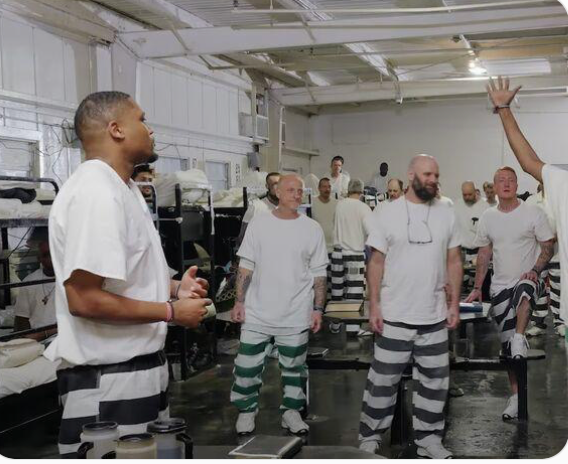
Books, art, music, journaling, education, small-group work, mentoring and regular contact with outside volunteers are being brought together inside Jefferson Correctional Institution in an unusual rehabilitation experiment that has become successful enough to double in size.
The program is called Amplify, and it operates at Jefferson Correctional Institution in Monticello, Florida. It isn’t simply a class prisoners attend for an hour and then leave. Amplify creates an entire residential community in which participating prisoners live together and work through a structured curriculum intended to encourage responsibility, emotional growth, purpose and preparation for life in a community—whether that community is eventually outside prison or remains behind the walls.
That is particularly striking given where it is happening. Monticello is the tiny county seat of rural Jefferson County in North Florida, about 25 miles east of Tallahassee. Its 2020 population was only 2,589 people. A substantial prison rehabilitation experiment is therefore taking place in a community so small that many Americans have never heard of it.
Amplify opened at Jefferson CI in April 2024 as a partnership between the prison and Higher Love, the nonprofit formerly known as Timothy’s Gift. By March 2026, demand and support had allowed it to expand to two dormitories capable of housing 136 men.
The curriculum combines seven core courses with at least three electives for every participant. Teaching methods include lectures, books, art, music, journaling and small-group discussion. Some courses are taught by outside professionals, but an important part of the model is deliberately inmate-led: selected prisoners are trained so that they can teach and mentor other men.
Outside volunteers also regularly enter the dorm—not merely for occasional special events but simply to spend time with the men, teach workshops and maintain relationships. Higher Love calls this its “Ministry of Presence.” The underlying idea is remarkably simple: rehabilitation requires human relationships, not merely punishment.
Higher Love itself grew from an unlikely beginning. Nashville businessman Ron Miller saw a 1998 television report about Timothy Kane, a 14-year-old sentenced to life in Florida. Miller began visiting and mentoring him, then began meeting other prisoners. With musician John Starnes, he expanded those visits into prison outreach; Timothy’s Gift became a nonprofit in 2012 and eventually became Higher Love. The organization says its work has reached more than 35,000 incarcerated people in 150 prisons across five states.
Former Florida warden Chris Southerland, who spent 35 years in corrections and became Florida’s first female prison warden, helped Higher Love establish Amplify and serves as its program coordinator.
The nonprofit is supported principally through charitable contributions. Its own fundraising specifically allows donors to sponsor Amplify programming, visits, curriculum, supplies and equipment.
None of this makes prison benign. But it represents something fundamentally different from warehousing human beings.
Inside a prison outside a town of fewer than 3,000 people, 136 men now have a place where reading, education, creativity, emotional reflection, responsibility and helping the next man are deliberately built into daily prison life.
For once, something inside a prison is expanding because people want more rehabilitation—not more systemic abuse.
Share now