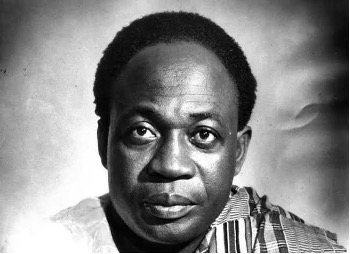
Three years after winning independence from Britain. Ghana had elected Kwame Nkrumah as its first president. The move ended the last constitutional ties to the British Crown.
Nkrumah had spent nearly a decade leading the independence movement. Imprisoned by British colonial authorities in 1950 for organizing mass protests and strikes, he was released after his party won a landslide election the following year. As prime minister, he guided Ghana to independence in 1957, making it the first sub-Saharan African colony to break free from European colonial rule in the post-World War II era.
Nkrumah believed political independence meant little without economic independence. He pushed for rapid industrialization, expanded education, healthcare, roads, and the massive Akosombo Dam project to generate electricity and support development. He also became one of the world’s leading voices for Pan-Africanism, arguing that African nations could only achieve lasting freedom if they united politically and economically rather than remaining divided by colonial borders.
Ghana’s republic came at the height of the Cold War, when newly independent nations were being pressured to line up behind either the United States or the Soviet Union. Nkrumah rejected that trap. One year later, in 1961, he joined leaders including Josip Broz Tito of Yugoslavia, Jawaharlal Nehru of India, Gamal Abdel Nasser of Egypt, Sukarno of Indonesia, and others in helping launch the Non-Aligned Movement. Together, they argued that formerly colonized nations had the right to choose their own path, control their own resources, and refuse domination by either Western capitalism or Soviet power.
For Nkrumah, nonalignment was not neutrality in the face of injustice. It was a strategy of anti-colonial resistance. He stood with other Global South leaders who challenged Western control, opposed imperialism, supported liberation movements, and insisted that the newly independent world would not simply trade old empires for new ones.
His success inspired movements across Africa. During the next decade, dozens of African colonies would win independence, and many leaders looked to Ghana as proof that colonial rule could be defeated.
In 1966, while he was abroad, the military overthrew his government in a coup that has long been debated, including questions about U.S. knowledge of and involvement with the coup plotters.
Today, Nkrumah remains one of Africa’s most influential and debated leaders: celebrated as a visionary champion of African liberation, Pan-Africanism, and Third World solidarity. His legacy reflects both the enormous hopes and the hard contradictions of the postcolonial world.