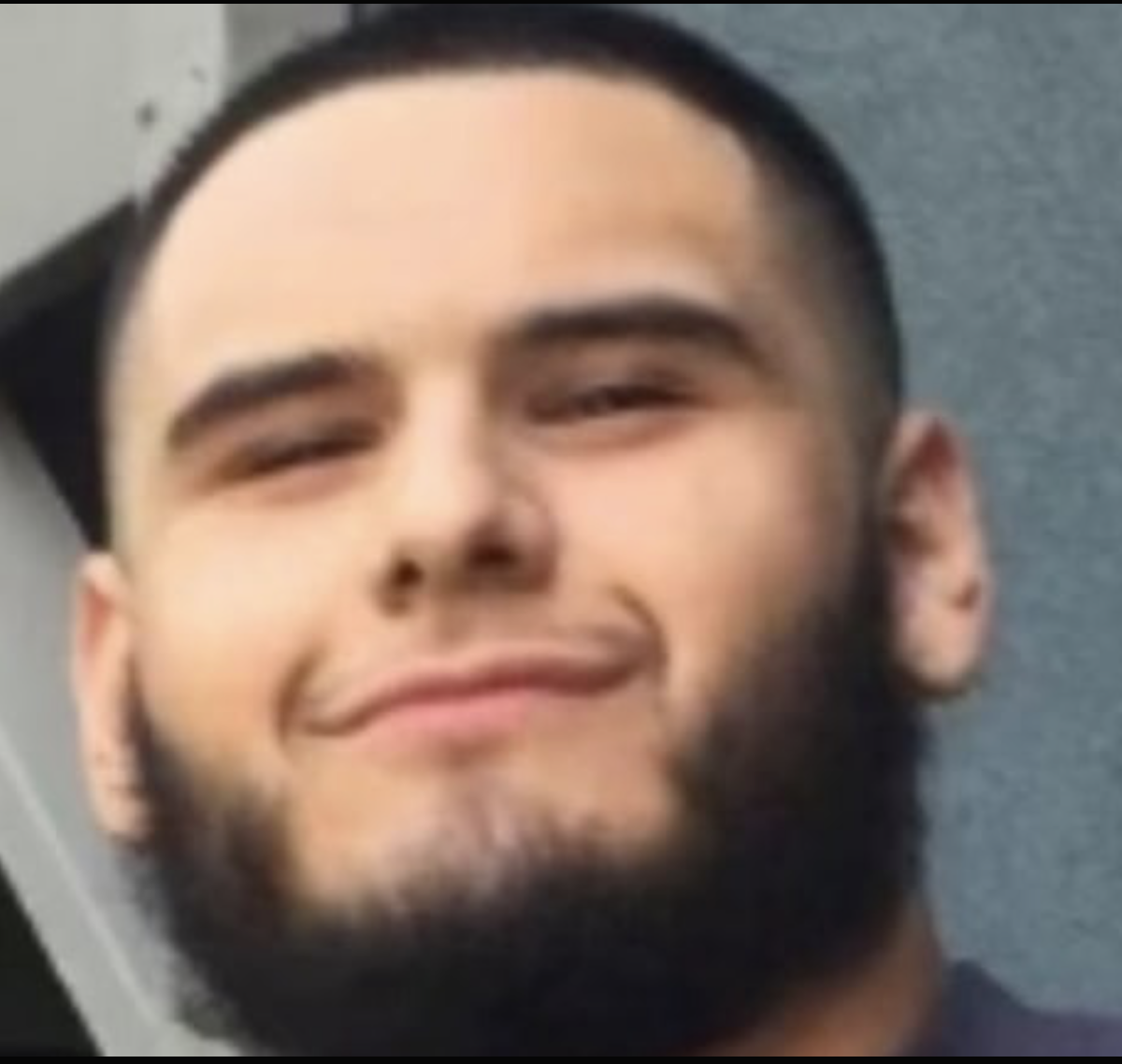
Leonel Chavez
Age : 24
Gender : Male
Race : Latino/a/e
Date : 09/28/2021
Location : Medford Street and Indiana Street
City : Los Angeles
County : Los Angeles
State : California
Agency : California Highway Patrol (CHP)
Officer(s) :Officer Daniel Castaneda
Cause of Death : Gunshot
Event : Killed by police during traffic collision response
OPEN RECORDS SUMMARY :
On 09/28/2021, California Highway Patrol Officer Daniel Castaneda shot and killed 24-year-old Leonel Chavez at Medford Street and North Indiana Street in East Los Angeles after CHP officers responded to a traffic collision. Chavez was unarmed.
.
Shortly after 3 p.m., Chavez was driving his mother's Honda Civic when it sideswiped a Chevrolet Camaro. His damaged Honda traveled approximately 500 feet before becoming disabled. Witnesses reported that Chavez attempted to leave the collision scene, and the CHP call was upgraded to a reported hit-and-run. A tow-truck operator told arriving officers that Chavez had been agitated and had gestured toward his waistband in a way the witness interpreted as threatening, although the witness did not report actually seeing a weapon.
.
Castaneda and trainee Officer Jennifer Sanchez arrived at approximately 3:32 p.m. Castaneda decided to detain Chavez to investigate the reported hit-and-run, a misdemeanor. Video shows Chavez eventually stopping, approaching with his hands raised and then placing his hands behind his head without being instructed to do so. Castaneda decided to frisk him because of the witness's report about the waistband gesture and Chavez's loose clothing.
.
According to Castaneda and Sanchez, when Castaneda reached for Chavez's hands, Chavez turned and reached for Castaneda's holstered handgun. Sanchez told investigators that she saw Chavez grip the gun, while Castaneda said Chavez attempted to take it twice and that he struggled to retain it. After Castaneda broke away, both officers drew their firearms and backed away.
.
The California DOJ's reconstruction shows Chavez at one point standing with his hands above his head while the officers pointed their guns at him. Police said Chavez then continued toward Castaneda despite commands to stop. Castaneda deployed his Taser, which did not incapacitate Chavez. Police alleged Chavez then moved rapidly toward Castaneda with his fists raised. Castaneda said he believed Chavez would tackle him, take his firearm and shoot him and Sanchez.
.
Castaneda fired seven rounds in approximately two seconds. Chavez sustained seven gunshot wounds, several of them fatal. No firearm, knife or other weapon was found on Chavez.
.
Officers did not immediately approach the wounded Chavez. The DOJ determined that approximately four minutes and 25 seconds elapsed between the shooting and officers approaching and handcuffing him, and that more than five minutes passed before medical aid began. Chavez had stopped moving for approximately two minutes and 15 seconds before officers approached him, and DOJ noted there was no direct evidence that he had a weapon. DOJ concluded medical aid might have been coordinated more effectively and recommended changes to CHP policy and training.
.
The shooting itself was captured by the patrol car's video system, but there was no accompanying audio because Sanchez did not activate the microphones until after the shooting. CHP officers were not equipped with body cameras. DOJ subsequently recommended that CHP equip all patrol officers with body-worn cameras.
.
What happened after the shooting raised additional serious concerns. After the microphones were activated, Castaneda and Sanchez muted them at different times. Video showed Castaneda motioning Sanchez aside, where he was recorded telling his trainee, “Don't say shit to anybody.” Sanchez then muted her microphone. Another CHP officer subsequently instructed Sanchez to say nothing because the incident could create civil liability. DOJ concluded that the muting could have prevented collection of valuable evidence and recommended that CHP review the conduct and take remedial action as warranted.
.
DOJ also criticized the officers' tactics before the shooting. Its review found that Castaneda and Sanchez had time to formulate a tactical plan but apparently did not do so; that Chavez was alone and not presenting a threat when officers arrived; that Castaneda went hands-on with Chavez with minimal time to evaluate him despite believing he might be armed or under the influence; and that Castaneda and Sanchez failed to adequately communicate with each other. DOJ recommended remedial review of CHP training and tactics.
.
There were further evidence-handling concerns. Castaneda told investigators that after firing he performed a tactical reload and retained the partially expended magazine. A responding CHP sergeant subsequently exchanged firearms and magazines with Castaneda and later exchanged them back. Castaneda said the gun he used to kill Chavez was not taken from him as evidence until three to four hours or more after the shooting. DOJ recommended that CHP determine whether its evidence-handling policies had been followed.
.
In May 2023, the California Department of Justice concluded that there was insufficient evidence to criminally prosecute Castaneda, finding that prosecutors could not prove beyond a reasonable doubt that his use of deadly force was unlawful. Despite declining charges, DOJ issued eight areas of policy and practice recommendations addressing recording equipment, body cameras, medical aid, communication between involved officers, use-of-force policy, training and tactics, evidence handling and public access to CHP policies.
.
Chavez's family vigorously contested the shooting from the beginning. His mother, Maritza Padilla, and family attorneys emphasized that Chavez was unarmed and argued that he posed no deadly threat. Attorney Christian Contreras called the shooting unjustified, while family attorney Humberto Guizar argued that the officers panicked and overreacted. The family continued organizing demonstrations and publicly demanding accountability after Chavez's death.
.
The family also filed a civil lawsuit against CHP and Castaneda in January 2022. The case went to an eight-day jury trial in Los Angeles County Superior Court in February 2025. The jury found Castaneda negligent and awarded $6 million in damages, while also finding Chavez 49% comparatively at fault, reducing the recoverable verdict accordingly. After the trial, jurors specifically indicated that they found Castaneda negligent for failing to tell Chavez that he was going to frisk him before going hands-on.
.
OFFICER BACKGROUND
Daniel Castaneda was the sole officer who fired at Chavez. Jennifer Sanchez, who was Castaneda's trainee and had been a CHP officer for approximately three months, drew and pointed her firearm but did not fire. DOJ records state that neither officer had previously been involved in a police shooting.
.
The most significant officer-background findings arise from Castaneda's conduct during and immediately after this shooting itself. DOJ found multiple tactical and procedural concerns despite ultimately declining criminal charges: Castaneda initiated a hands-on frisk without an apparent tactical plan, did not adequately coordinate with his inexperienced trainee, delayed approaching and rendering aid to the wounded Chavez, participated in muting police recording equipment, instructed Sanchez not to speak to anyone after the shooting and retained possession of the gun used to kill Chavez for hours while firearms and magazines were exchanged with a supervisor.
.
The later civil verdict is also significant to Castaneda's record. Although the California DOJ found insufficient evidence for a criminal prosecution in 2023, a civil jury considering the encounter in 2025 reached a different conclusion under the civil standard of proof and found Castaneda negligent.
.
The California Highway Patrol had significant institutional problems directly relevant to this case. At the time Chavez was killed, CHP patrol officers were not equipped with body cameras, leaving the patrol-car camera as the principal police recording of the shooting. DOJ concluded that body cameras could have provided crucial additional evidence and recommended that CHP equip all patrol officers with them.
.
The East Los Angeles CHP operation was also embroiled in a major internal corruption investigation during this period. In July 2021, less than three months before Chavez was killed, the California Attorney General announced criminal charges against six former CHP officers from the East Los Angeles station arising from an alleged multiyear overtime-fraud scheme. The investigation later expanded dramatically, with dozens of CHP officers accused of fraudulently claiming overtime.
.
CHP's handling of Chavez's shooting itself exposed broader transparency and accountability deficiencies. DOJ found problems involving failure to activate audio, officers muting microphones, communications between involved officers before they were separated, delayed medical aid, tactical planning, use-of-force policy language and evidence preservation. DOJ additionally noted that CHP had elected not to publicly post many standards, policies, practices, procedures and training materials even though comparable local law-enforcement agencies were required to do so, making access to CHP policies unnecessarily difficult for the public.
.
The combination of the family challenge, independent video evidence, DOJ's extensive criticism of CHP practices and tactics, and the later jury finding that Castaneda was negligent makes this case substantially different from the sparse initial CHP account of an officer shooting an allegedly threatening person. Chavez was unarmed, the shooting began as a response to a property-damage traffic collision and reported misdemeanor hit-and-run, and the family's civil case ultimately resulted in a jury finding fault in Castaneda's handling of the encounter.
SOURCE LINKS :
https://oag.ca.gov/news/press-releases/california-department-justice-releases-report-officer-involved-shooting-leonel
https://oag.ca.gov/system/files/ois/report/2023_05_Chavez_AB1506_Report.pdf
https://www.foxla.com/news/el-sereno-shooting-attorney-releases-video-leonel-chavez
https://www.cbsnews.com/losangeles/news/ca-doj-refuses-to-charge-chp-officers-that-shot-and-killed-unarmed-man-in-el-sereno/
https://www.latimes.com/california/story/2021-09-29/california-highway-patrol-fatal-shooting-el-sereno
https://laist.com/news/criminal-justice/chp-killing-of-unarmed-man-in-east-la-under-state-investigation-leonel-chavez-humerto-guizar
https://fightbacknews.org/articles/los-angeles-family-holds-protest-1-year-after-california-highway-patrol-killed-beloved-leo
https://deangazzo.com/kimberly-sullivan-promoted-to-partner-2-2-2/
https://oag.ca.gov/node/542666
https://openpayrolls.com/employee/daniel-s-castaneda-9571