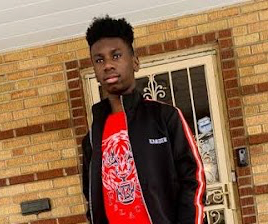
Amir Jordan
Age : 19
Gender : Male
Race : Black
Date : 08/29/2024
Location : Este Avenue near Chickering Avenue
City : Cincinnati
County : Hamilton
State : Ohio
Agency : Cincinnati Police Department
Officer(s) :Not Disclosed
Cause of Death : Vehicle
Event : Pedestrian killed by miscoded police emergency-response crash
OPEN RECORDS SUMMARY :
On 08/29/2024, 19-year-old Amir Jordan was killed after a Cincinnati Police Department officer driving a marked 2021 Ford Explorer police cruiser struck him on Este Avenue near Chickering Avenue in Cincinnati's Spring Grove Village neighborhood. Jordan had just gotten off a Metro bus and was crossing Este Avenue while traveling to his father's nearby home. The police cruiser was operating in emergency mode with its lights and siren activated. Amir was taken to the University of Cincinnati Medical Center, where he died from his injuries.
.
The crash occurred at approximately 5:56 p.m. The officer was responding to a call that Cincinnati's Emergency Communications Center had classified as a Priority 1-Red "Shooting" incident, the city's highest level of emergency response. That classification permitted and prompted responding Cincinnati police officers to travel using lights and sirens.
.
Initial public accounts portrayed the officer as responding to a reported shooting or a report of a person who had been shot. Cincinnati Fraternal Order of Police President Ken Kober stated after Amir's death that the officer had been dispatched following reports of a person shot and was traveling with emergency lights and siren activated.
.
A wrongful-death lawsuit filed by Amir's mother, Shenee McClendon, in August 2026 now sharply challenges that description of the emergency. According to the complaint and the computer-aided dispatch records cited in it, the underlying 911 call did involve a firearm being discharged, but the caller had not been shot, no injured shooting victim was awaiting emergency help, and the woman accused of firing the weapon had already left the scene before Amir was killed.
.
According to the lawsuit, the initial 911 call was received at approximately 5:47 p.m. Call-taker Sarah Houseworth entered information indicating that a woman had "shot at" the caller and that a vehicle windshield had been damaged. By approximately 5:50 p.m., however, the call information expressly stated that the caller "was not shot." The allegation involved shots fired at or near a vehicle and resulting property damage rather than a person suffering a gunshot wound.
.
At approximately 5:51 p.m., dispatcher Chelsea Basista assigned six Cincinnati police units to the call while it remained classified as the Priority 1-Red shooting response. Seconds later, additional information documented that the woman accused of firing the gun was no longer at the location and included a description of her and the vehicle in which she had left.
.
Despite that information, according to the lawsuit, the emergency classification was not downgraded and responding officers were not directed to reduce their response. Two additional police units were subsequently assigned, bringing the response to at least eight units.
.
The lawsuit alleges ECC employees had almost five minutes after learning both that the caller had not been shot and that the alleged shooter had left the scene in which they could have corrected the classification and slowed the police response before Amir was struck. The complaint argues that had the call been properly reclassified as a delayed firearm report, property-damage incident, non-in-progress weapons complaint, or another lower-priority event, the officer who hit Amir would neither have been expected nor authorized to continue traveling in emergency mode at that location.
.
At approximately 5:56 p.m., the police Ford Explorer struck Amir as he crossed Este Avenue in front of or near the Metro bus from which he had just exited. Police and witnesses said the cruiser's lights and siren were operating. Amir was not in a marked crosswalk. The intersection had no marked pedestrian crossing serving the nearby bus stops, and residents subsequently described Este Avenue as a location where speeding, crashes and pedestrians crossing between bus stops were recurring concerns.
.
The officer stopped, requested medical assistance and rendered aid. Amir was transported to UC Medical Center but died from his injuries.
.
Police initially announced that the fatal collision would be investigated in essentially the same manner as another traffic crash. Cincinnati police traffic investigators examined evidence that reportedly included police dash-camera footage and Metro bus video. The Cincinnati Police Department has not publicly identified the officer who was driving the cruiser in the reliable sources located for this report.
.
Amir's family questioned the circumstances surrounding his death almost immediately. His grandmother, Paula McClendon, said three days after the crash that the family still had not been contacted by a city official or police officer with an explanation of what had occurred. Nearly two years later, when the wrongful-death lawsuit was announced in August 2026, McClendon said the city still had never contacted the family to explain Amir's death.
.
Amir's father, Anthony Jordan, who lived near the crash location, initially said he held no personal grudge against the police and had productive conversations with CPD following his son's death. He instead urged the city to address pedestrian safety on Este Avenue, where bus passengers regularly crossed a street without conveniently located marked crosswalks.
.
WRONGFUL-DEATH LAWSUIT:
In August 2026, Amir's mother, Shenee McClendon, acting on behalf of her son and his estate, filed a wrongful-death lawsuit alleging that failures within Cincinnati's Emergency Communications Center created the unnecessary emergency response that resulted in Amir's death.
.
The defendants identified in reporting on the lawsuit are the City of Cincinnati; City Manager Sheryl Long; Emergency Communications Center Director William Vedra; Deputy Director Karli Piper; Operations Manager Christopher Dooley; dispatcher Chelsea Basista; and call-taker Sarah Houseworth.
.
Significantly, the police officer whose cruiser struck Amir is not named as a defendant. Lead attorney Zachary Gottesman has publicly stated that the family's case does not contend that the officer was responsible for receiving inaccurate information from dispatch. Gottesman said the officer believed he was responding to an active shooting and was responding on the basis of what the Emergency Communications Center had communicated to police.
.
The lawsuit instead alleges that a dangerous mismatch developed between what ECC personnel actually knew and what responding police officers were being led to believe. The complaint alleges that ECC employees knew there was no shooting victim needing rescue and knew that the person accused of firing a gun had already left, yet failed to change a classification that continued sending police vehicles through Cincinnati streets under emergency conditions.
.
The complaint asserts six causes of action, including wrongful death, conscious pain and suffering, wanton and/or reckless misclassification of the emergency call, wanton and/or reckless dispatch conduct, wanton and reckless misconduct by ECC supervisors, and malicious civil conspiracy involving alleged fraudulent misrepresentation and concealment.
.
ALLEGED PRIOR WARNING OF THE DANGER:
The lawsuit contends Amir's death was not the result of an unforeseeable one-time dispatch mistake. It alleges Cincinnati officials had already been warned that the Emergency Communications Center was incorrectly classifying firearm-related calls in ways that caused police officers to make dangerous emergency responses to circumstances that did not actually require them.
.
The complaint cites an October 2022 email from ECC dispatch supervisor Sean Williams describing what he considered a significant increase in "gun" runs that did not justify that coding. Examples reportedly included a caller who did not want police and had already left the location, and another event coded as a gun call simply because a firearm had been involved in an earlier robbery.
.
The lawsuit also cites a June 2024 event, only months before Amir was killed, involving a BB gun that had reportedly been classified as a drive-by shooting even though the people involved had already entered a residence before the 911 call was made. According to documents described in the lawsuit, a Cincinnati police lieutenant specifically raised concerns that officers were being sent lights-and-sirens to incidents involving BB or airsoft guns that did not justify such an emergency response, creating danger both to officers and civilians.
.
The family's lawsuit therefore alleges that the precise public-safety danger that materialized when the cruiser struck Amir — police driving rapidly through city neighborhoods because a call was coded as a shooting although no active shooting emergency existed — had been identified internally before his death.
.
ALLEGATIONS OF CONCEALMENT AND FAILURE TO DOCUMENT:
The lawsuit goes considerably beyond negligent call classification. It alleges Cincinnati ECC management maintained practices intended to prevent evidence of internal failures from becoming public records.
.
The complaint incorporates a sworn statement from a former administrative assistant to ECC Director William Vedra who reportedly worked in that position from September 2023 until July 2026. According to the affidavit described in the lawsuit, Vedra prohibited electronic recording of management meetings because recordings could become records subject to Ohio public-records law.
.
The former employee further alleges that handwritten notes were instead used to generate incomplete or inaccurate meeting minutes that omitted references to human errors and system failures, including recurring problems. The affidavit also alleges the existence of an unwritten practice discouraging employees from discussing ECC failures by email because email would create a public record reflecting negatively on the center.
.
These remain allegations in pending litigation and have not been established by a judge or jury. The City of Cincinnati has declined to respond publicly to the substance of the claims, citing its practice of not commenting on pending litigation.
.
The allegations are particularly significant because the ECC had a written Agency Liability Report procedure requiring reports when employee conduct allegedly created an increased likelihood of death, injury or substantial property loss. Attorneys for Amir's family say they requested all such reports through the end of 2024 and received records reflecting only one internal investigation concerning an EMS incident.
.
The lawsuit contends that the absence of reports does not demonstrate an absence of dangerous incidents; rather, the family alleges management avoided creating documentation that would have revealed recurring failures.
.
PRIOR CINCINNATI 911 FAILURES:
The lawsuit places Amir's death against the background of the widely scrutinized 2018 death of 16-year-old Kyle Plush. Plush became trapped inside his family's minivan, called Cincinnati 911 twice seeking help, and died after failures in the emergency response prevented officers from locating him.
.
Plush's family later sued Cincinnati. The case resulted in a $6 million settlement in 2021 and a five-year reform program involving outside emergency-communications experts. Amir's family's lawsuit alleges those reforms were intended to prevent precisely the sort of emergency-communications breakdown that it contends contributed to Amir's death three years later.
.
The new lawsuit seeks compensatory, wrongful-death, survival and punitive damages. It also seeks court-supervised reforms of Cincinnati's Emergency Communications Center involving call prioritization and classification, dispatch practices, Agency Liability Reporting, training, supervision, auditing and quality assurance.
.
The attorneys representing Amir's family include Zachary Gottesman, Thomas Bruns and Robb Stokar.
.
Cincinnati's Emergency Communications Center had documented serious failures well before Amir Jordan's death beyond the Kyle Plush case cited in the lawsuit. In January 2020, a Cincinnati 911 call-taker spent nearly eight minutes speaking with the neighbor of a man believed to be suffering a stroke, despite being told that the man was deteriorating and could die. No police, fire or medical unit was dispatched. The man, Pat Ward, was found dead the following day. City Manager Patrick Duhaney concluded that the call-taker had committed "serious neglect of duty" and violated multiple established procedures, and she was subsequently fired. Reporting at the time also disclosed an earlier January 2017 Cincinnati homicide call in which the 911 center was unable to enter information promptly into its computer-aided dispatch system, could not determine the correct location and improperly coded the call. An internal police review concluded that "serious service issues occurred in all facets of the call." FOX19 further reported that Cincinnati's communications center had experienced chronic staffing and training problems, CAD system outages, police-radio failures and misrouted cellular 911 calls.
.
The pattern did not end with the reforms imposed following Kyle Plush's 2018 death. Cincinnati's own quality-control data later showed that during 2023 — the year before Amir was killed — between approximately 12% and 17% of reviewed 911 calls each month were classified as non-compliant with protocol. The city says performance subsequently improved substantially, with monthly non-compliance generally falling to roughly 3% to 7% during 2025. The figures do not mean every non-compliant call resulted in a dangerous response, but they establish that protocol deviations remained measurable and recurring during the period immediately preceding Amir's death.
.
There is also evidence of another potentially deadly communications breakdown after Amir's death. In a January 2026 Spring Grove Village house fire that killed three members of the Archambault family, trapped resident Sol Archambault reportedly called 911 and told the call-taker where inside the burning house they were trapped. That information was entered into the communications system, but firefighters at the scene reportedly did not receive it in time. Once firefighters learned where Sol was located, they removed Sol from the house approximately four minutes later, but Sol subsequently died from smoke inhalation. A 911 expert and the firefighters' union president both said that information identifying the location of trapped occupants is critical information that must reach responding firefighters. The precise responsibility for that breakdown remains disputed, but it provides another example of critical information reaching Cincinnati's emergency communications system without reaching responders when it mattered.
.
Cincinnati also has a documented history of dangerous high-speed police responses and pursuits. In a 2020 Cincinnati Police Department pursuit that began in the city and continued across the Ohio River into Northern Kentucky, CPD officers pursued a vehicle at speeds exceeding 100 mph, including across the Roebling Suspension Bridge and into oncoming traffic. The pursuit ended in Newport with two people dead and two others injured. Survivors later sued Cincinnati and the participating officers, alleging that the high-speed pursuit was reckless and unnecessary.
.
Another Cincinnati police crash documented in 2017 involved a CPD cruiser that lost control on a curve and struck a civilian's vehicle. Cincinnati's own accident report stated that the police cruiser "failed to maintain control in a curve," but the city rejected the civilian driver's damage claim by asserting governmental immunity because the officer had been acting in the course of police duties. The incident was significant enough to become part of testimony before the Ohio legislature concerning governmental immunity for police crashes.
.
.
Taken together, these incidents make Amir Jordan's lawsuit considerably more difficult to dismiss as an allegation concerning one isolated call-taker mistake. Cincinnati had experienced fatal or potentially fatal failures involving call classification, failure to dispatch help, failure to transmit critical information, location and CAD problems, and incomplete communication between 911 personnel and responders. City officials had implemented extensive reforms after Kyle Plush's death and continued tracking significant rates of protocol non-compliance afterward. Against that history, Amir's family's allegation is not merely that an employee pressed the wrong code on one evening; it is that city officials knew emergency-communications errors could determine how aggressively police vehicles moved through populated neighborhoods and nevertheless failed to prevent another consequential breakdown.
.
ACCOUNTABILITY:
As of 08/19/2026, the allegations concerning ECC misclassification, supervisory failures and intentional concealment remain allegations contained in pending civil litigation and have not been adjudicated.
.
There is nevertheless a documented discrepancy between the information originally presented publicly after Amir's death and the information contained in the dispatch chronology now cited by the lawsuit. Immediately after the crash, the incident was publicly described as an officer rushing to a reported shooting or person shot. The records cited by the lawsuit indicate that before Amir was killed, ECC personnel had already entered information that the caller had not been shot and that the woman accused of firing the gun was no longer at the scene.
.
The family's attorneys contend that the officer who struck Amir was placed in an extraordinarily dangerous situation by that information failure and do not presently blame him for relying on the emergency classification transmitted by ECC. Their allegation is instead that Cincinnati's emergency-communications system created and unnecessarily prolonged the emergency driving conditions that led directly to the fatal collision.
.
No reliable source located for this update establishes that the officer who struck Amir was criminally charged, administratively disciplined, or personally sued in connection with his death.
.
OFFICER BACKGROUND:
The Cincinnati Police Department has not publicly identified the officer who was driving the marked police Ford Explorer that struck and killed Amir Jordan in the reliable sources located for this update. Because the officer has not been reliably identified, no individual officer disciplinary or prior-incident history can responsibly be attributed.
.
ABOUT AMIR:
Amir had recently graduated from Dohn Community School in May 2024. His family described him as loving, independent and deeply interested in animals. He participated in the Cincinnati Zoo Academy program, practiced karate and helped mentor younger students. Contemporary family accounts described him as someone who naturally attracted people and frequently helped others.
.
His grandmother Paula McClendon helped raise him and described Amir as her best friend. His father said Amir was his oldest son. Amir was only 19 and was traveling to see his father when he was killed.
.
In August 2026, shortly before announcement of the wrongful-death lawsuit, Cincinnati designated the intersection of Chickering and Este avenues with the honorary name "Amir Jordan Way."
SOURCE LINKS :
https://www.wvxu.org/local-news/2026-08-19/lawsuit-alleges-problems-911-center-cpd-officer-hit-killed-teen-pedestrian-wrongful-death-ecc-cincinnati-police
https://www.fox19.com/2026/08/18/cpd-cruiser-crash-that-killed-high-school-grad-caused-by-reckless-911-dispatch-lawsuit-says/
https://www.wcpo.com/news/local-news/hamilton-county/cincinnati/lawsuit-alleges-cincinnati-911-failures-led-to-death-of-man-hit-killed-by-cpd-officer
https://www.wlwt.com/article/amir-jordan-family-lawsuit-crash-cruiser-911-call/73466867
https://www.wcpo.com/news/local-news/there-should-be-safeguards-grandmother-of-19-year-old-amir-jordan-killed-after-cpd-officer-hit-him-with-cruiser-calls-for-change-in-protocol
https://www.fox19.com/2024/08/30/witness-says-changes-needed-street-where-police-cruiser-hit-killed-pedestrian/
https://www.fox19.com/2024/09/05/father-calls-change-after-son-is-struck-killed-by-cincinnati-police-cruiser/
https://local12.com/news/local/family-pedestrian-killed-never-expected-lose-young-man-amir-jordan-spring-grove-village-police-kill-hit-cruiser-officer-cincinnati-ohio-este-avenue-chickering-bus-stop-busy-street-crosswalks-sirens-tragic-incident-investigation
https://www.gofundme.com/f/amirs-funeral-arrangements
https://dayton247now.com/news/local/cincinnati-announces-honorary-street-name-man-hit-killed-while-crossing-street-chickering-avenue-este-honoring-honor-streets-spring-grove-village-intersection-amir-jordan